The human body has many different parts, and learning their names is an important part of everyday Hindi vocabulary. Children, students, Hindi learners, and beginners often need body parts vocabulary when talking about health, appearance, movement, exercise, and daily activities.
Common body parts include सिर, आँख, कान, नाक, मुँह, हाथ, पैर, उंगली, घुटना, और पेट. Learning these words helps learners describe the human body and understand simple Hindi conversations more easily.
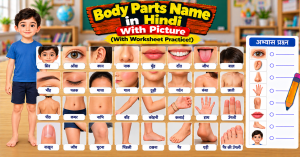
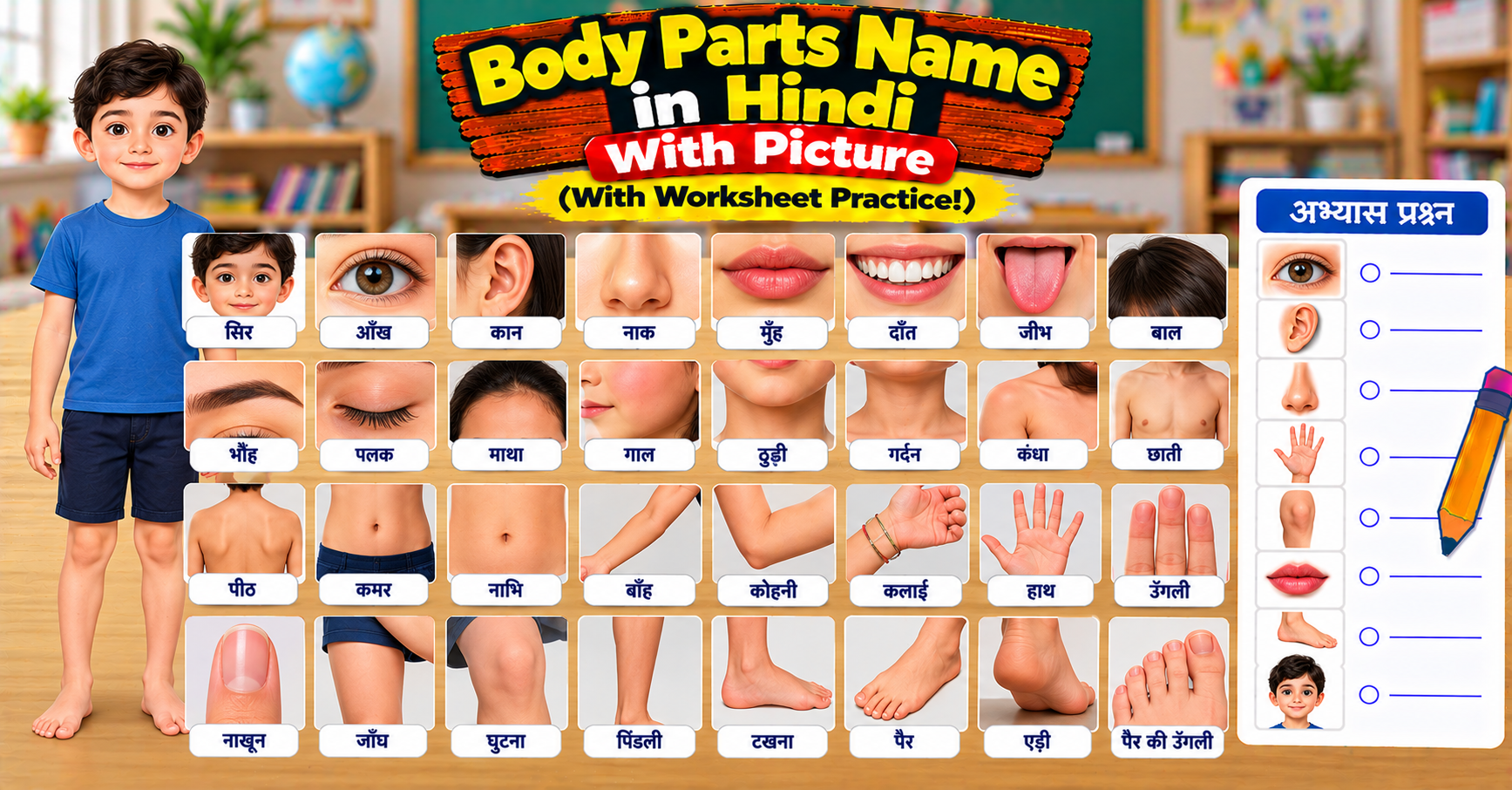
Learning body parts names in Hindi with pictures makes vocabulary more interesting because learners can see each body part while learning its Hindi name and English meaning.
Learn Body Parts Names in Hindi
Body parts vocabulary is frequently used in everyday Hindi conversations. These words are useful when talking about a person’s appearance, health, physical activities, injuries, exercise, and personal care.
For example:
- सिर means Head.
- आँख means Eye.
- कान means Ear.
- नाक means Nose.
- मुँह means Mouth.
- हाथ means Hand.
- पैर means Foot or Leg, depending on context.
- उंगली means Finger.
- घुटना means Knee.
- पेट means Stomach or Abdomen.
Learning these basic words gives Hindi learners a strong foundation for describing the human body in everyday situations.
Benefits of Learning Body Parts Names
Learning body parts vocabulary helps children and Hindi learners communicate about the body more clearly. These words are useful at home, school, in conversations, during exercise, and when describing simple physical conditions.
Body parts are also easy to learn visually because learners can see them on themselves or in pictures. This makes it easier to connect a Hindi word with its meaning.
This vocabulary also introduces useful words related to health, personal hygiene, movement, appearance, clothing, exercise, and everyday activities.
Learning these names can help children describe where something is located on the body and understand simple instructions more easily.
Body Parts Names in Hindi With Pictures
Pictures are a helpful way to learn body parts because learners can directly connect each Hindi word with the corresponding part of the human body.
Some basic body parts to learn include सिर, चेहरा, आँख, कान, नाक, मुँह, गर्दन, कंधा, हाथ, उंगली, पैर, घुटना, और पेट.
Body parts pictures can be used for classroom lessons, vocabulary worksheets, flashcards, children’s learning activities, and Hindi language practice.

Head
सिर
Syllable: Head
Pronunciation: Sir
- He hurt his head. – उसके सिर पर चोट लगी।
- My head feels heavy. – मेरा सिर भारी लग रहा है।
- She covered her head. – उसने अपना सिर ढक लिया।
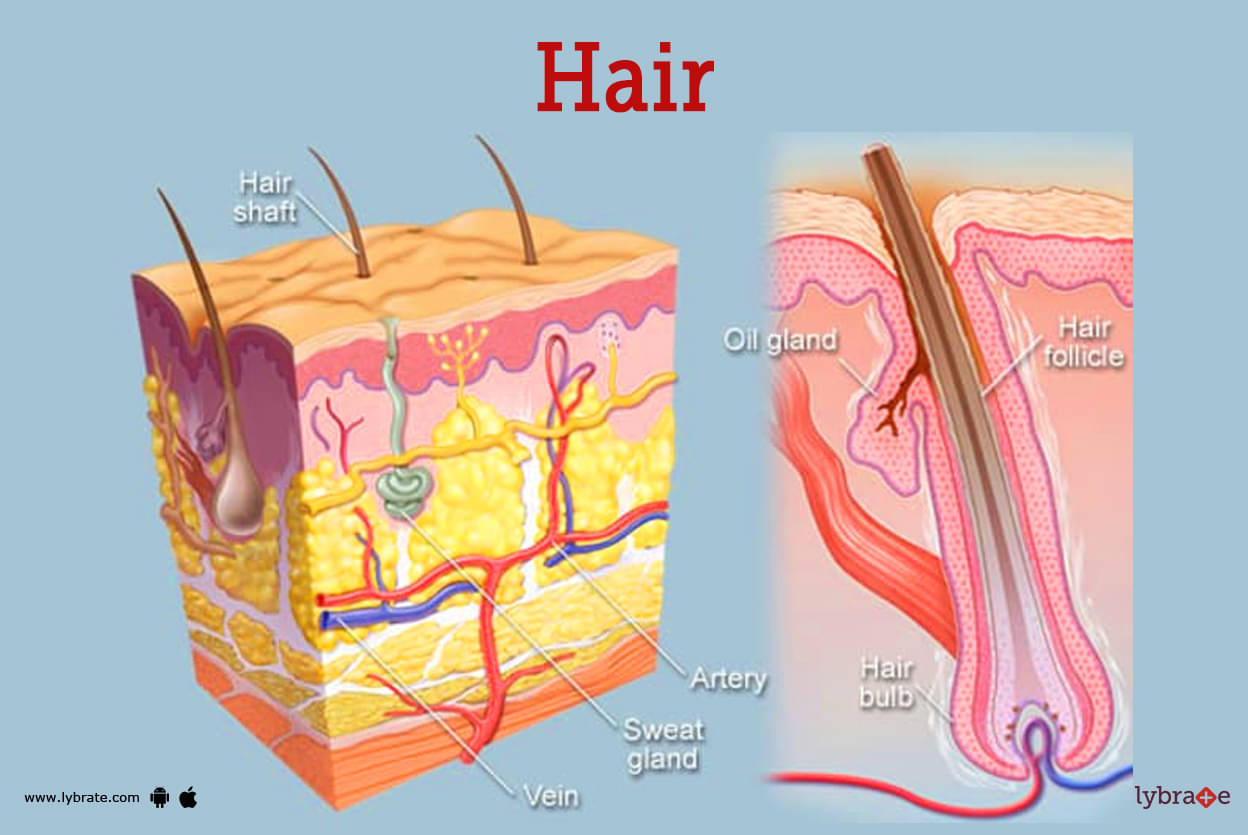
Hair
बाल
Syllable: Hair
Pronunciation: Baal
- Her hair is long. – उसके बाल लंबे हैं।
- I washed my hair today. – मैंने आज अपने बाल धोए।
- His hair is black. – उसके बाल काले हैं।

Face
चेहरा
Syllable: Face
Pronunciation: Chehra
- She has a beautiful face. – उसका चेहरा सुंदर है।
- Wash your face. – अपना चेहरा धोओ।
- His face looks happy. – उसका चेहरा खुश दिखाई देता है।

Forehead
माथा
Syllable: Forehead
Pronunciation: Maatha
- He touched his forehead. – उसने अपने माथे को छुआ।
- Her forehead is warm. – उसका माथा गर्म है।
- I have a small mark on my forehead. – मेरे माथे पर एक छोटा निशान है।
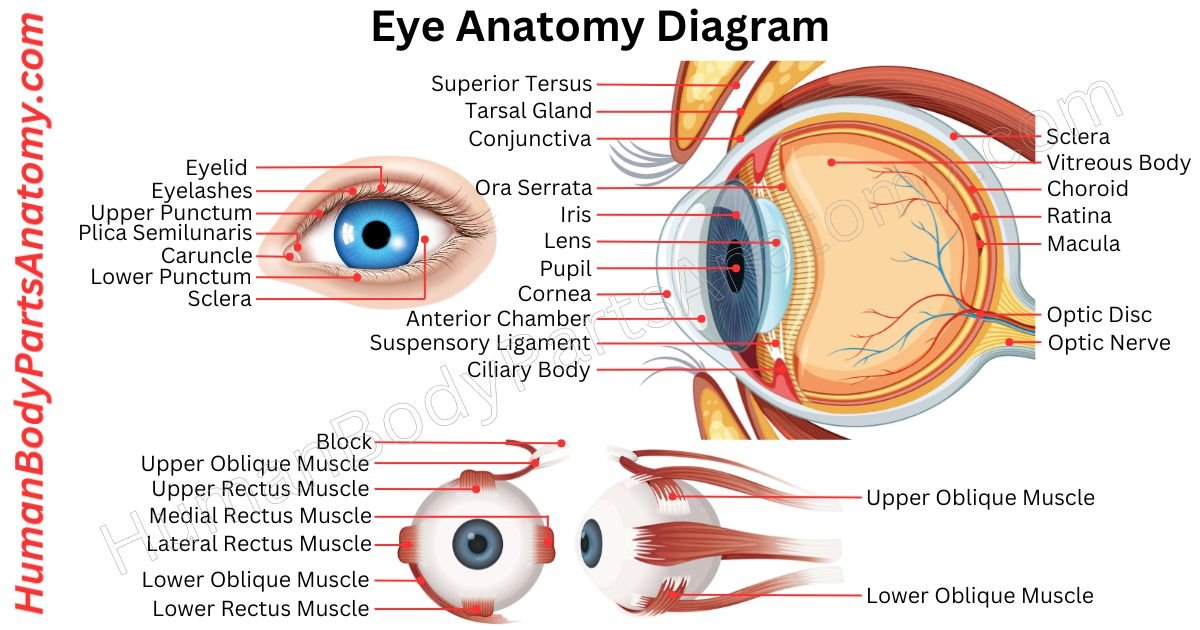
Eye
आँख
Syllable: Eye
Pronunciation: Aankh
- She has beautiful eyes. – उसकी आँखें सुंदर हैं।
- My eye hurts. – मेरी आँख में दर्द है।
- He closed his eyes. – उसने अपनी आँखें बंद कर लीं।
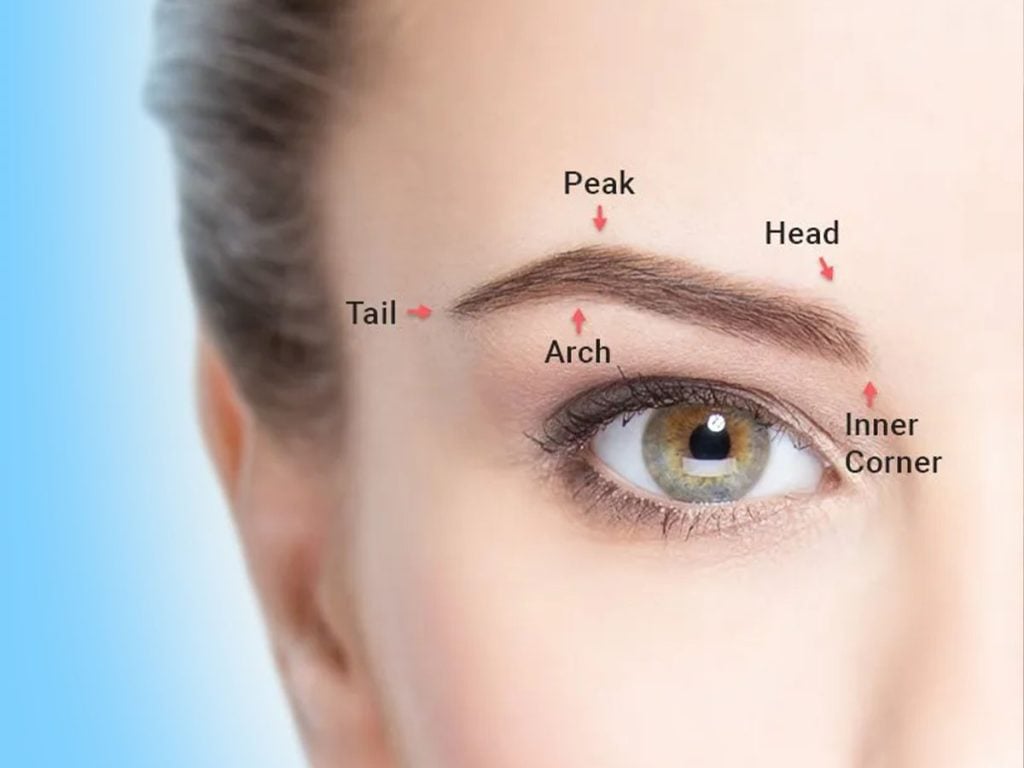
Eyebrow
भौंह
Syllable: Eyebrow
Pronunciation: Bhaunh
- She has thick eyebrows. – उसकी भौंहें घनी हैं।
- He raised his eyebrow. – उसने अपनी भौंह उठाई।
- My eyebrows are dark. – मेरी भौंहें गहरी हैं।

Eyelash
पलक
Syllable: Eyelash
Pronunciation: Palak
- Her eyelashes are long. – उसकी पलकें लंबी हैं।
- An eyelash fell into my eye. – मेरी आँख में एक पलक गिर गई।
- She has thick eyelashes. – उसकी पलकें घनी हैं।

Eyelid
पलक
Syllable: Eyelid
Pronunciation: Palak
- Her eyelids are closed. – उसकी पलकें बंद हैं।
- He opened his eyelids slowly. – उसने धीरे-धीरे अपनी पलकें खोलीं।
- The eyelid protects the eye. – पलक आँख की रक्षा करती है।
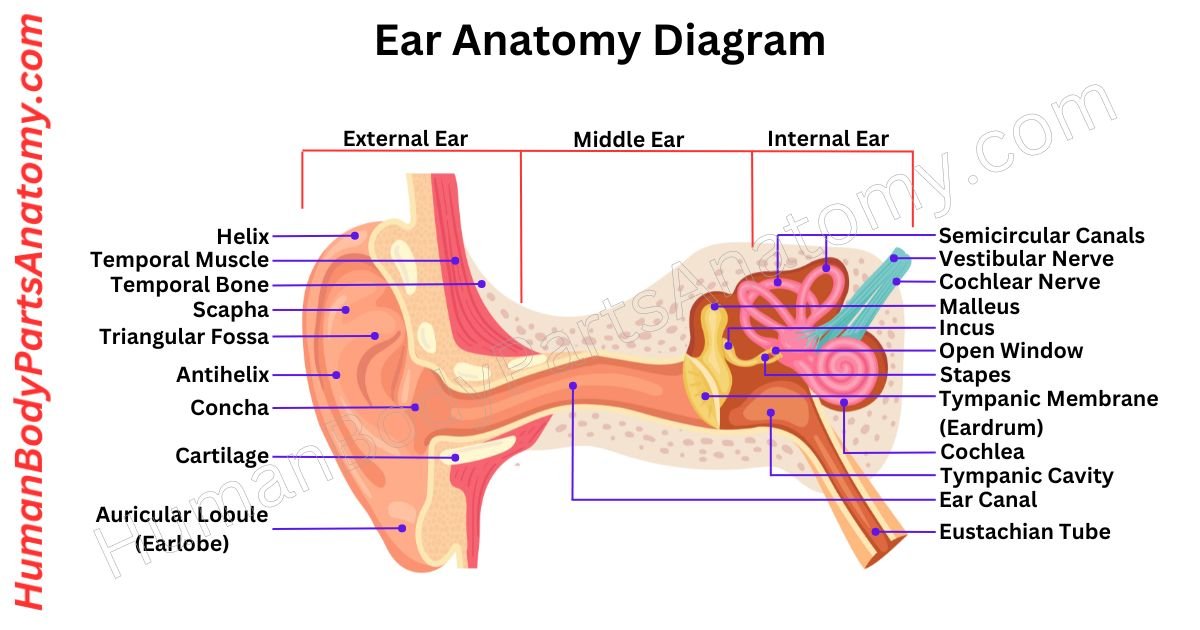
Ear
कान
Syllable: Ear
Pronunciation: Kaan
- I can hear with my ears. – मैं अपने कानों से सुन सकता हूँ।
- My ear hurts. – मेरे कान में दर्द है।
- She has small ears. – उसके कान छोटे हैं।
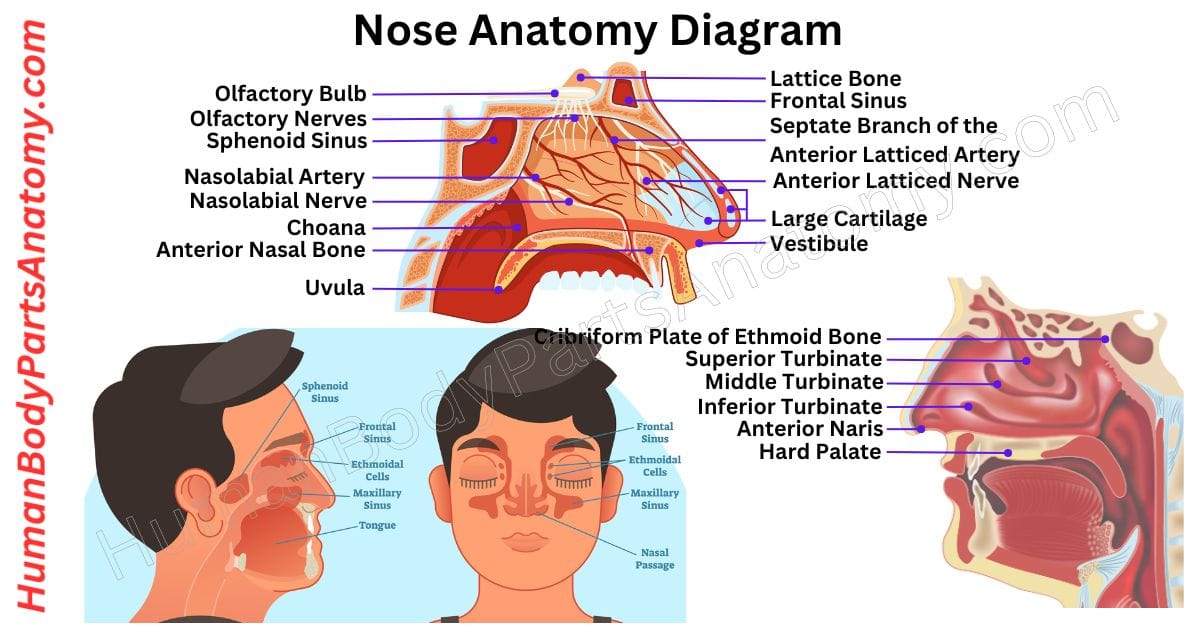
Nose
नाक
Syllable: Nose
Pronunciation: Naak
- He has a small nose. – उसकी नाक छोटी है।
- My nose is cold. – मेरी नाक ठंडी है।
- She touched her nose. – उसने अपनी नाक को छुआ।
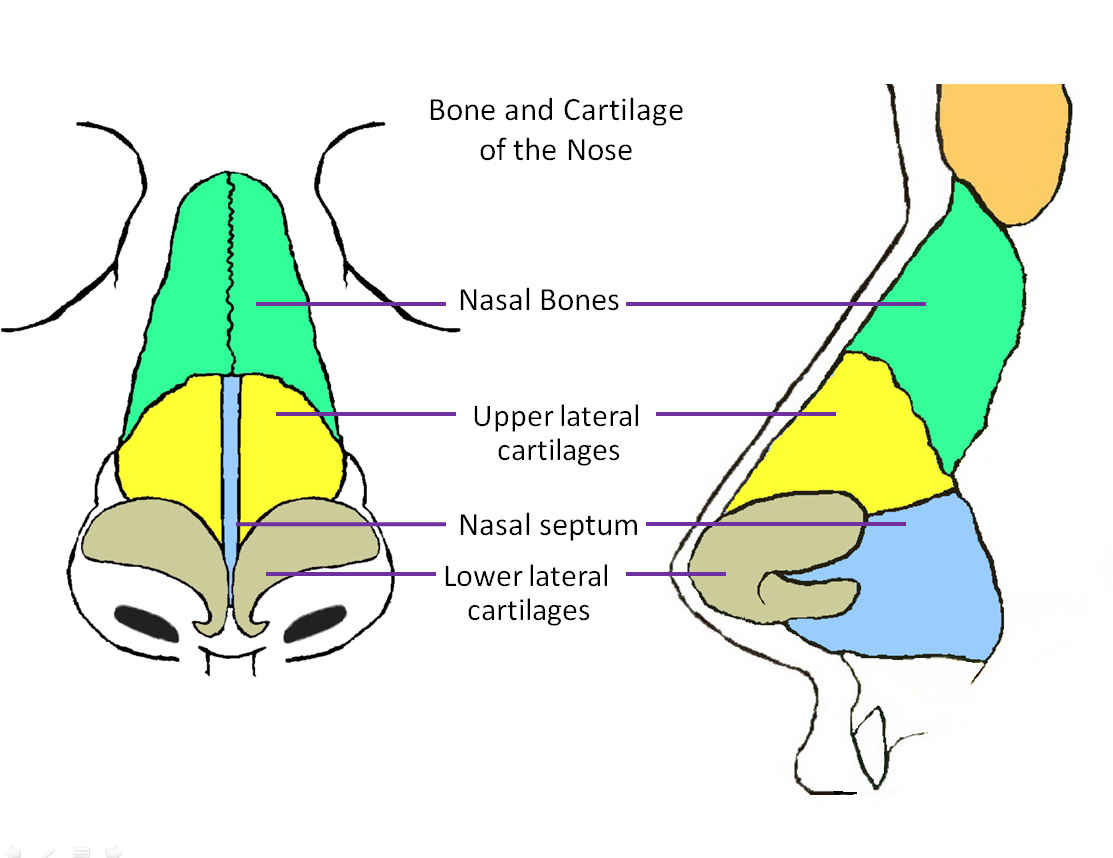
Nostril
नथुना
Syllable: Nostril
Pronunciation: Nathuna
- He breathed through his nostrils. – उसने अपने नथुनों से साँस ली।
- One nostril is blocked. – एक नथुना बंद है।
- The nostrils help us breathe. – नथुने हमें साँस लेने में मदद करते हैं।

Cheek
गाल
Syllable: Cheek
Pronunciation: Gaal
- The baby has soft cheeks. – बच्चे के गाल मुलायम हैं।
- Her cheeks are red. – उसके गाल लाल हैं।
- He touched his cheek. – उसने अपने गाल को छुआ।

Mouth
मुँह
Syllable: Mouth
Pronunciation: Munh
- Open your mouth. – अपना मुँह खोलो।
- He washed his mouth. – उसने अपना मुँह धोया।
- She has a small mouth. – उसका मुँह छोटा है।
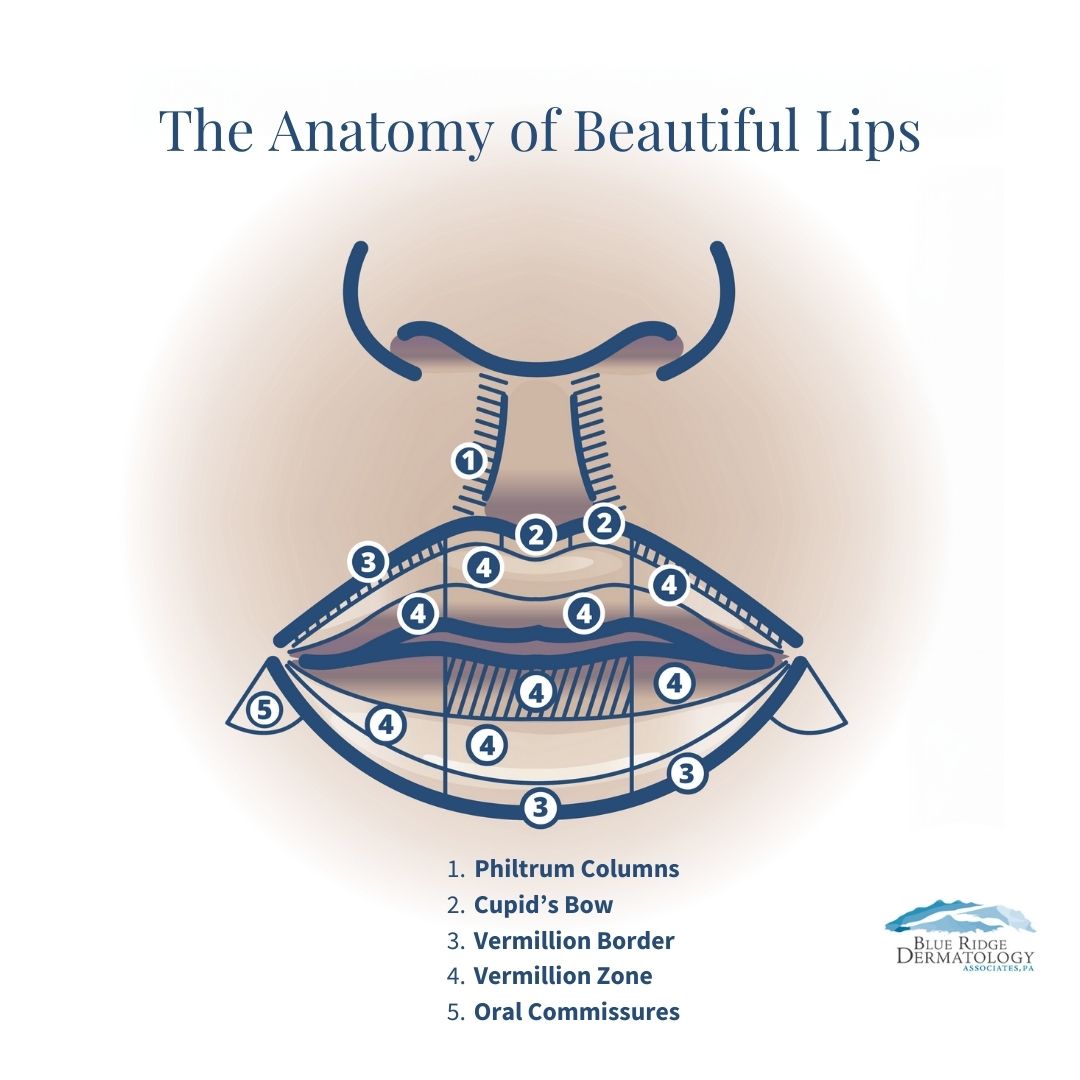
Lip
होंठ
Syllable: Lip
Pronunciation: Honth
- Her lips are pink. – उसके होंठ गुलाबी हैं।
- My lips are dry. – मेरे होंठ सूखे हैं।
- He hurt his lower lip. – उसके निचले होंठ पर चोट लगी।
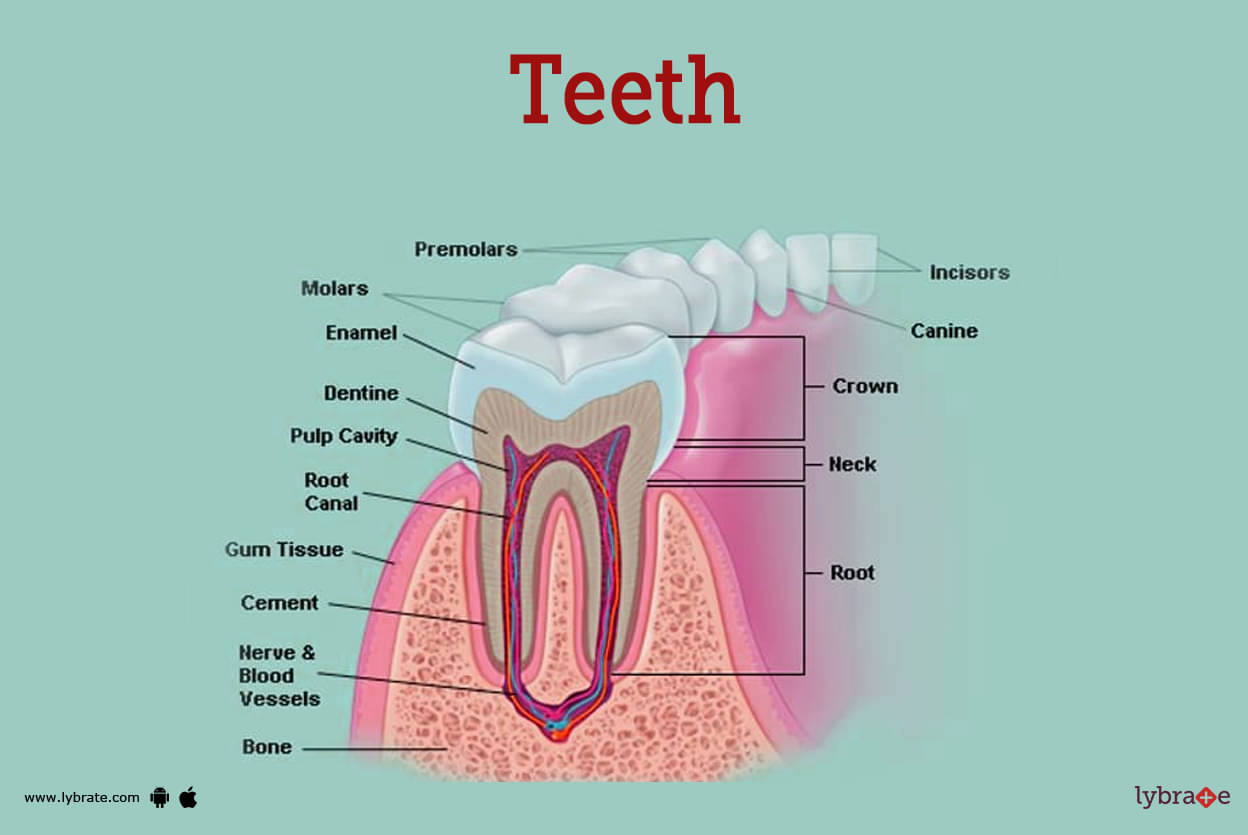
Tooth
दाँत
Syllable: Tooth
Pronunciation: Daant
- I brush my teeth every morning. – मैं हर सुबह अपने दाँत साफ़ करता हूँ।
- One tooth is loose. – एक दाँत हिल रहा है।
- The dentist checked my tooth. – दंत चिकित्सक ने मेरे दाँत की जाँच की।

Tongue
जीभ
Syllable: Tongue
Pronunciation: Jeev
- I burned my tongue. – मेरी जीभ जल गई।
- The tongue helps us taste food. – जीभ हमें भोजन का स्वाद लेने में मदद करती है।
- Stick out your tongue. – अपनी जीभ बाहर निकालो।
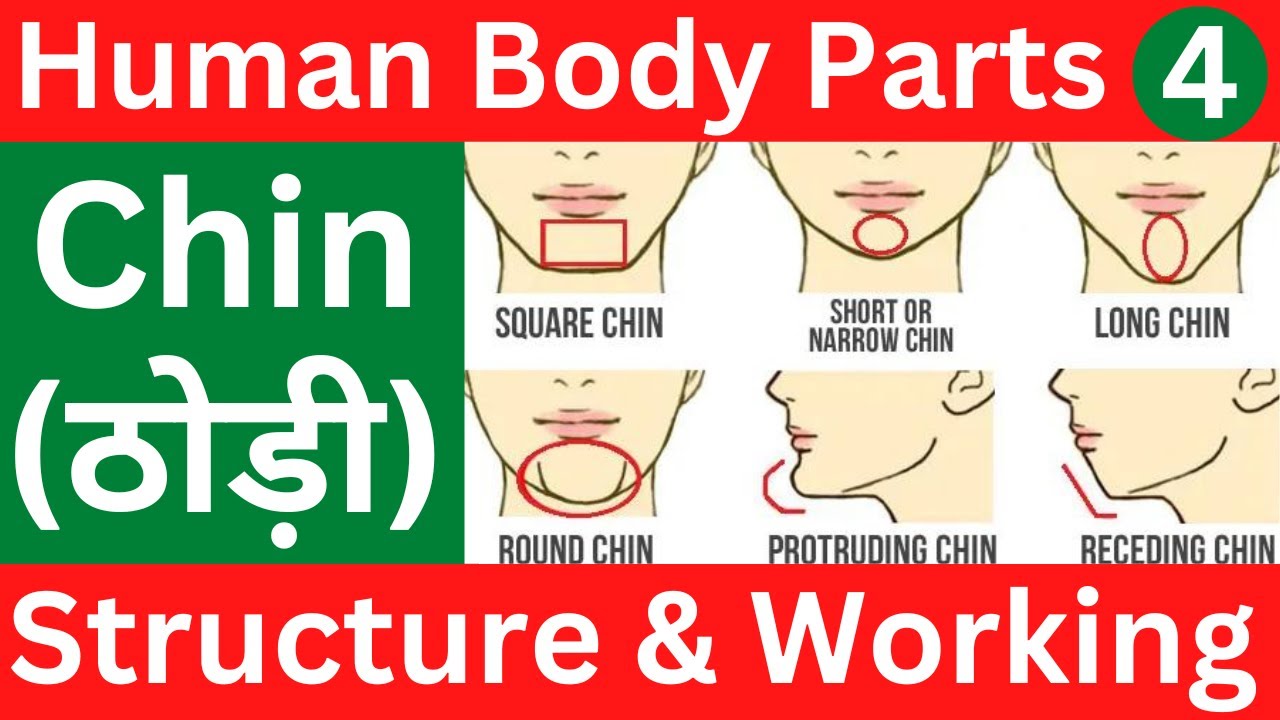
Chin
ठोड़ी
Syllable: Chin
Pronunciation: Thodi
- He has a round chin. – उसकी ठोड़ी गोल है।
- She touched her chin. – उसने अपनी ठोड़ी को छुआ।
- His chin is small. – उसकी ठोड़ी छोटी है।

Jaw
जबड़ा
Syllable: Jaw
Pronunciation: Jabda
- He has a strong jaw. – उसका जबड़ा मज़बूत है।
- My jaw hurts. – मेरे जबड़े में दर्द है।
- The jaw helps us chew food. – जबड़ा हमें खाना चबाने में मदद करता है।
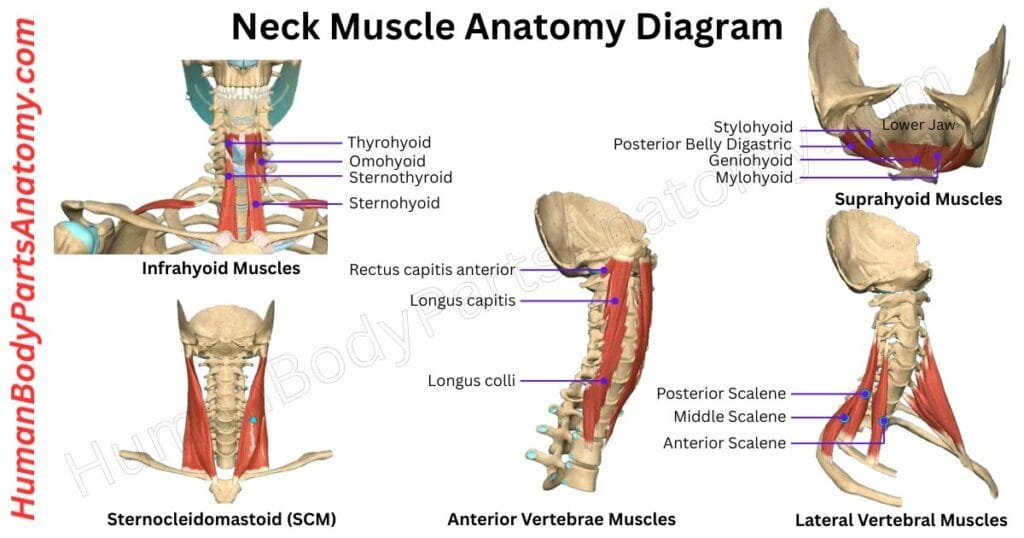
Neck
गर्दन
Syllable: Neck
Pronunciation: Gardan
- My neck hurts. – मेरी गर्दन में दर्द है।
- He turned his neck. – उसने अपनी गर्दन घुमाई।
- She wore a scarf around her neck. – उसने अपनी गर्दन के चारों ओर स्कार्फ पहना।

Shoulder
कंधा
Syllable: Shoulder
Pronunciation: Kandha
- My shoulder hurts. – मेरे कंधे में दर्द है।
- He carried the bag on his shoulder. – उसने बैग अपने कंधे पर रखा।
- She touched my shoulder. – उसने मेरे कंधे को छुआ।
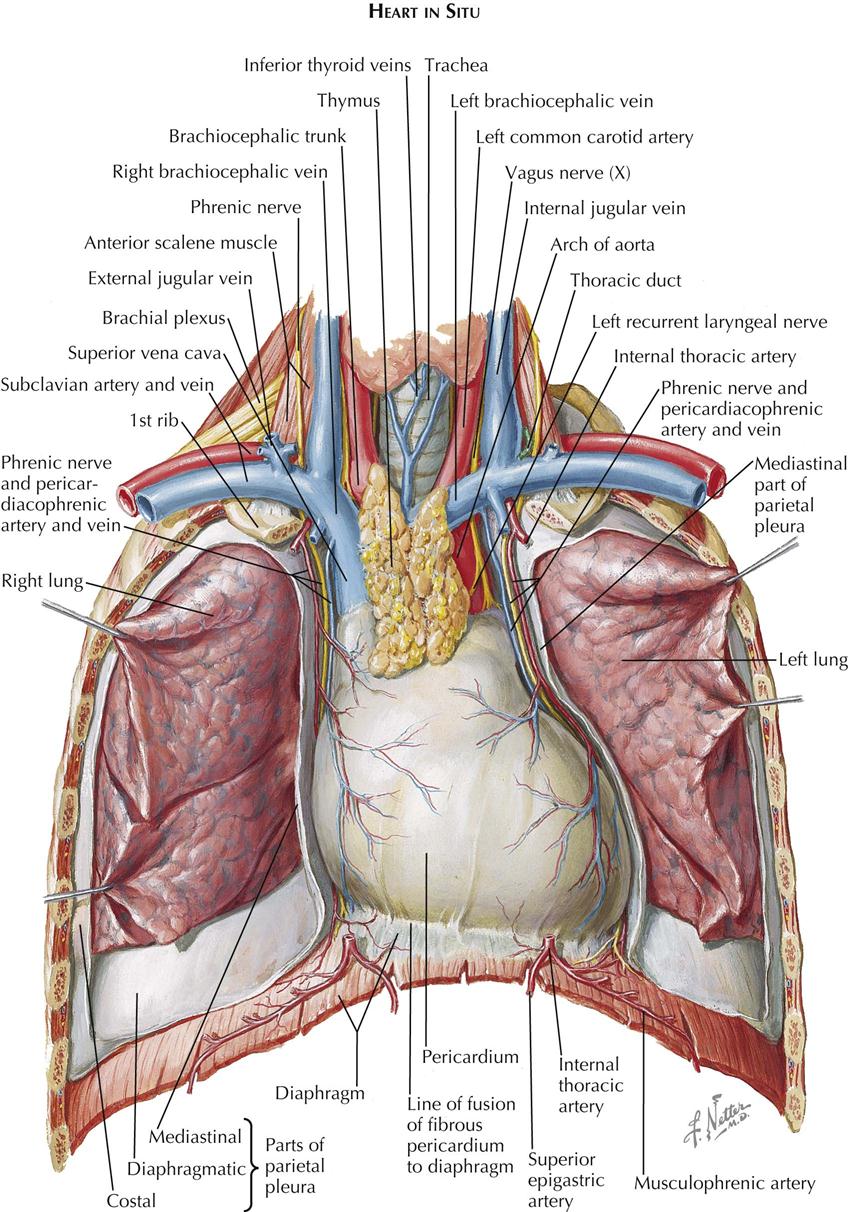
Chest
छाती
Syllable: Chest
Pronunciation: Chhaati
- He has a strong chest. – उसकी छाती मज़बूत है।
- My chest feels tight. – मेरी छाती में जकड़न महसूस हो रही है।
- He held the bag against his chest. – उसने बैग को अपनी छाती से लगा रखा था।
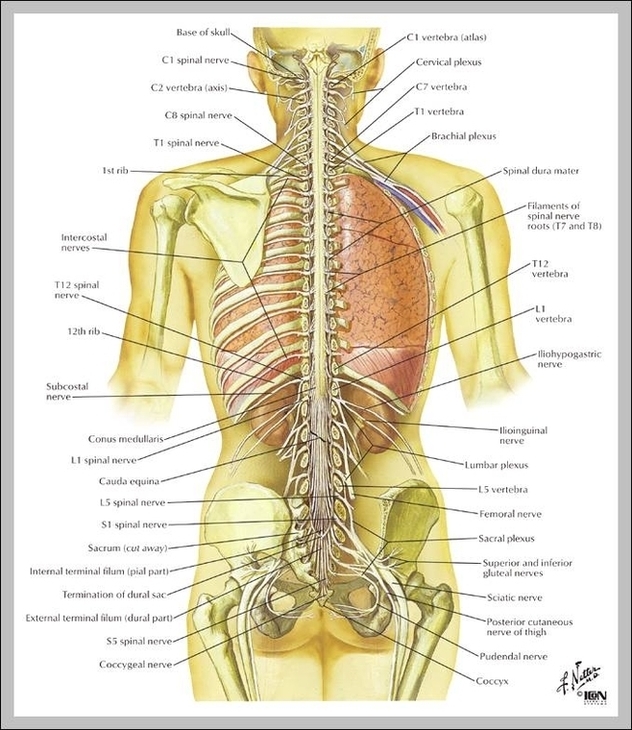
Back
पीठ
Syllable: Back
Pronunciation: Peeth
- My back hurts. – मेरी पीठ में दर्द है।
- He carried the child on his back. – उसने बच्चे को अपनी पीठ पर उठाया।
- She stretched her back. – उसने अपनी पीठ को खींचकर व्यायाम किया।
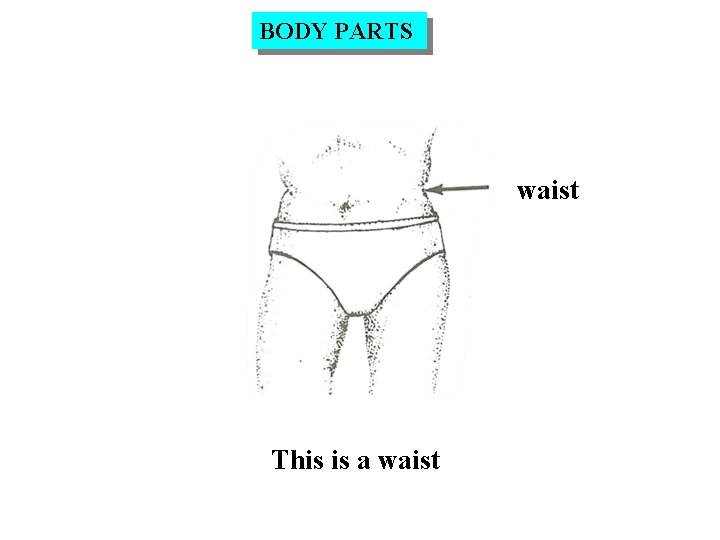
Waist
कमर
Syllable: Waist
Pronunciation: Kamar
- Her waist is slim. – उसकी कमर पतली है।
- My waist hurts after sitting. – बैठने के बाद मेरी कमर में दर्द होता है।
- He put his hands on his waist. – उसने अपने हाथ कमर पर रखे।
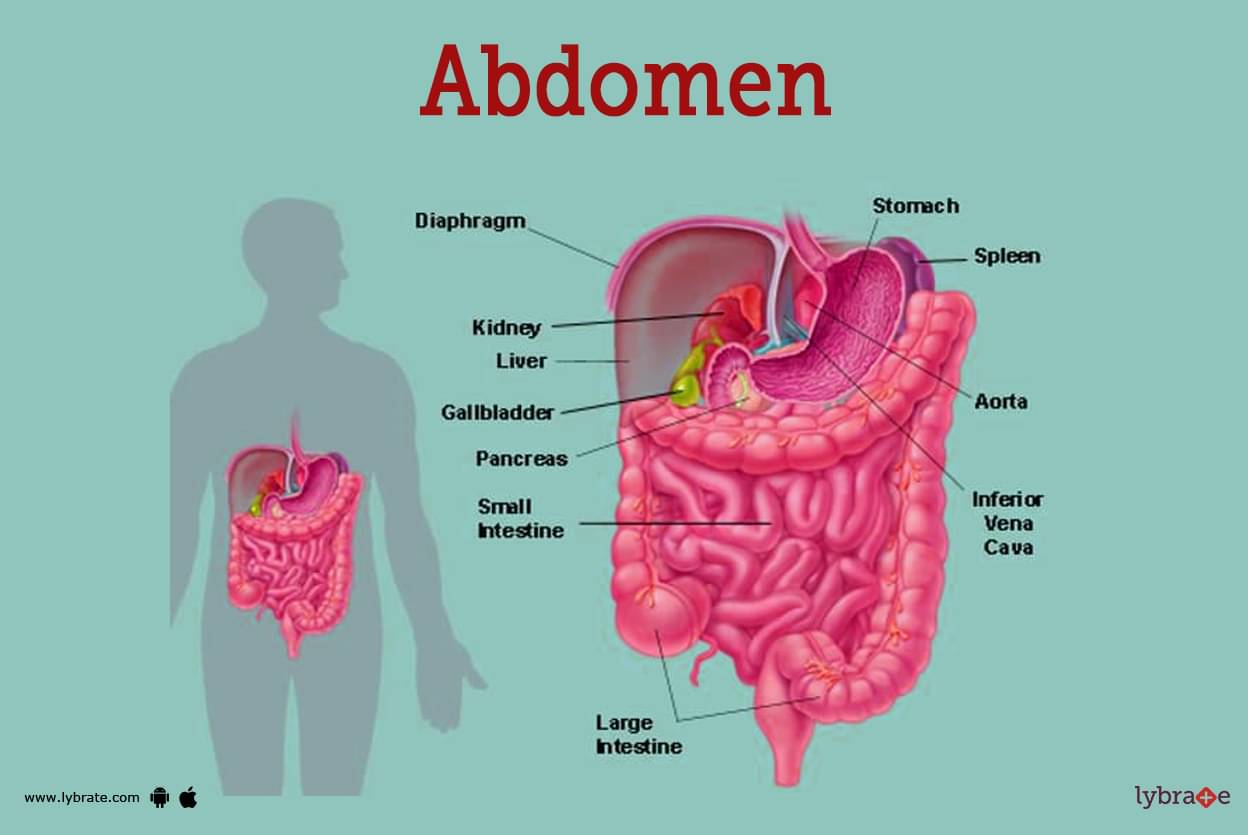
Stomach
पेट
Syllable: Stomach
Pronunciation: Pet
- My stomach hurts. – मेरे पेट में दर्द है।
- He has a full stomach. – उसका पेट भरा हुआ है।
- She touched her stomach. – उसने अपने पेट को छुआ।

Arm
बाँह
Syllable: Arm
Pronunciation: Baah
- He lifted his arm. – उसने अपनी बाँह उठाई।
- My arm is tired. – मेरी बाँह थक गई है।
- She injured her arm. – उसकी बाँह में चोट लगी।
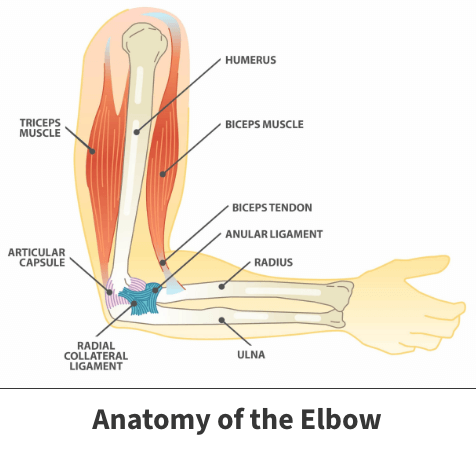
Elbow
कोहनी
Syllable: Elbow
Pronunciation: Kohni
- He hurt his elbow. – उसकी कोहनी में चोट लगी।
- My elbow feels sore. – मेरी कोहनी में दर्द महसूस हो रहा है।
- She bent her elbow. – उसने अपनी कोहनी मोड़ी।

Forearm
बाँह का निचला हिस्सा
Syllable: Forearm
Pronunciation: Baah Ka Nichla Hissa
- He injured his forearm. – उसकी बाँह के निचले हिस्से में चोट लगी।
- The forearm connects the elbow and wrist. – बाँह का निचला हिस्सा कोहनी और कलाई को जोड़ता है।
- She stretched her forearm. – उसने अपनी बाँह के निचले हिस्से को खींचकर व्यायाम किया।
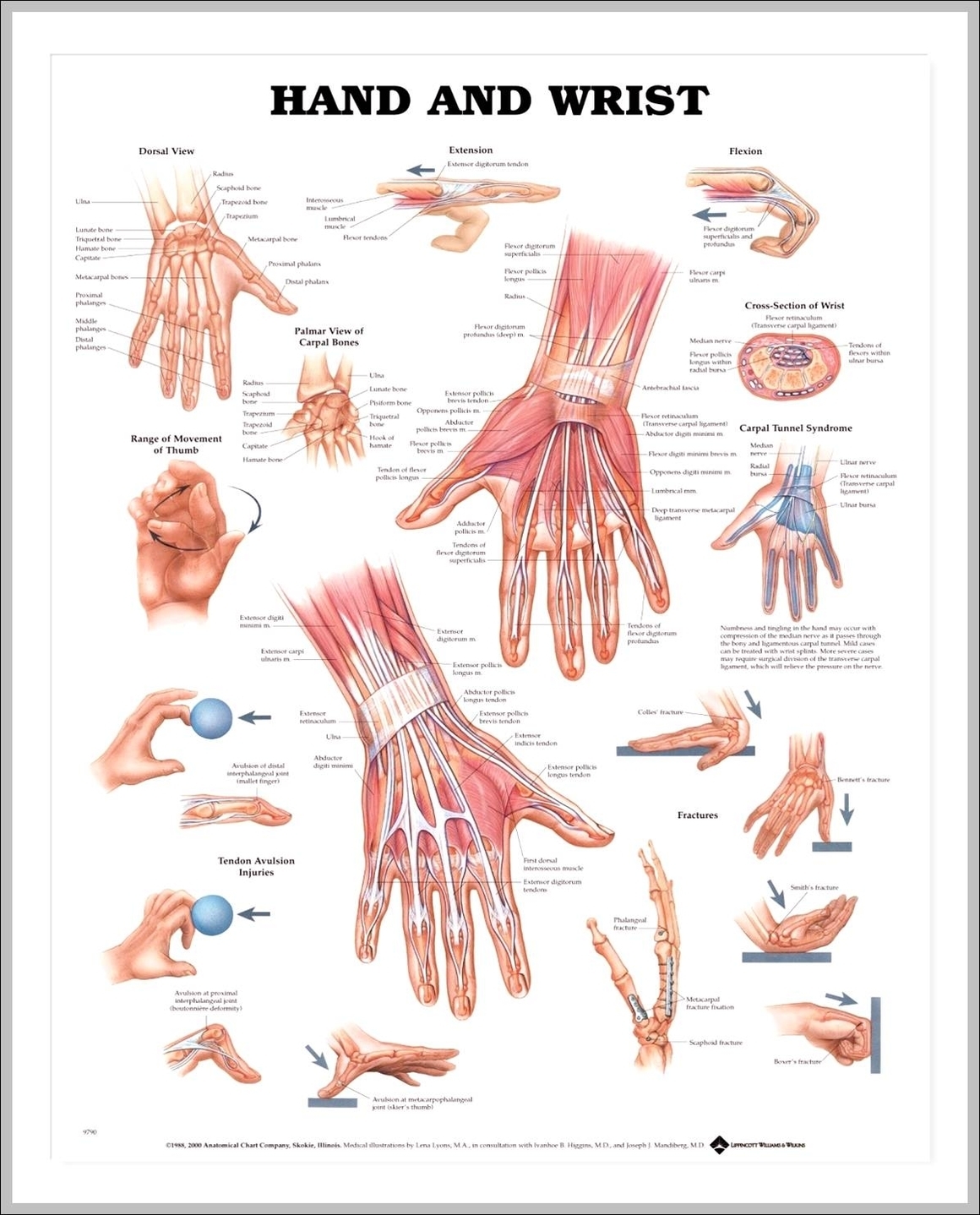
Wrist
कलाई
Syllable: Wrist
Pronunciation: Kalai
- My wrist hurts. – मेरी कलाई में दर्द है।
- She wears a watch on her wrist. – वह अपनी कलाई पर घड़ी पहनती है।
- He moved his wrist carefully. – उसने अपनी कलाई सावधानी से हिलाई।
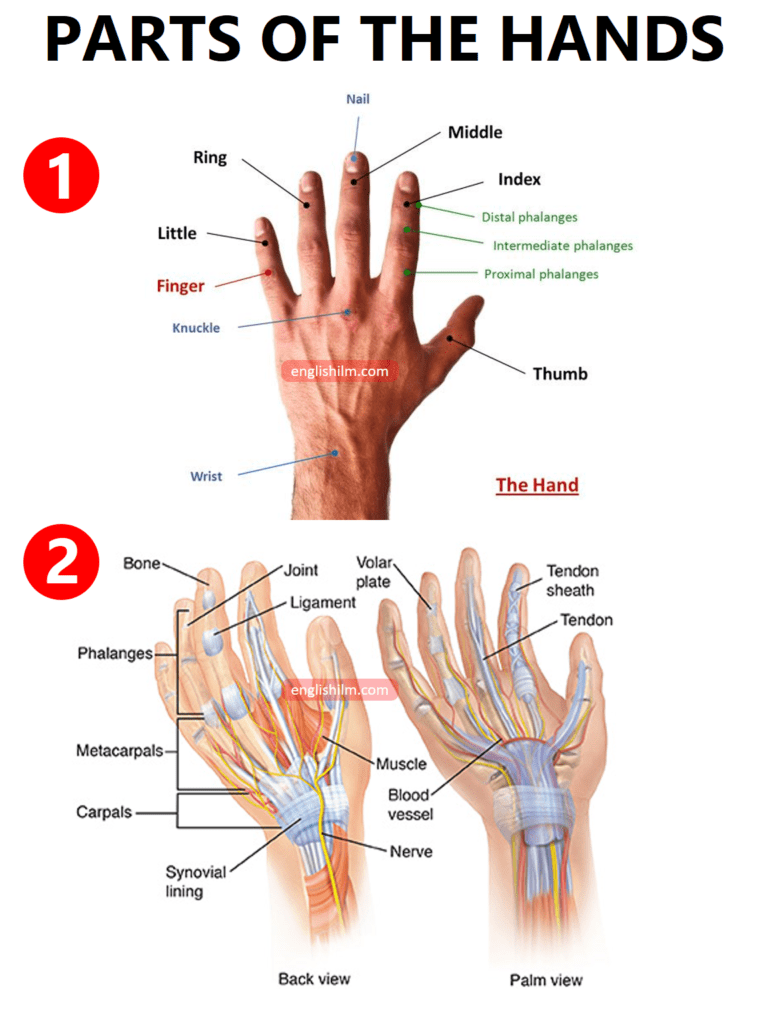
Hand
हाथ
Syllable: Hand
Pronunciation: Haath
- Wash your hands. – अपने हाथ धोओ।
- He raised his hand. – उसने अपना हाथ उठाया।
- She held the book in her hand. – उसने किताब अपने हाथ में पकड़ी।

Palm
हथेली
Syllable: Palm
Pronunciation: Hatheli
- Her palm is soft. – उसकी हथेली मुलायम है।
- He put the coin in his palm. – उसने सिक्का अपनी हथेली में रखा।
- My palm is sweaty. – मेरी हथेली पर पसीना है।
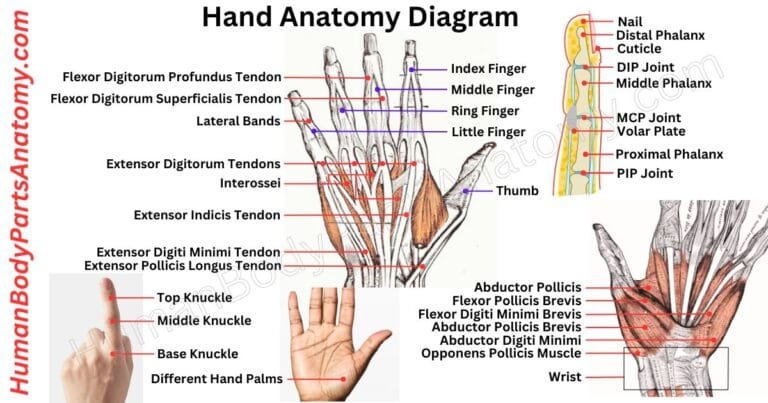
Finger
उँगली
Syllable: Finger
Pronunciation: Ungli
- I cut my finger. – मेरी उँगली कट गई।
- He pointed with his finger. – उसने अपनी उँगली से इशारा किया।
- She moved her fingers. – उसने अपनी उँगलियाँ हिलाईं।

Thumb
अँगूठा
Syllable: Thumb
Pronunciation: Angootha
- He hurt his thumb. – उसके अँगूठे में चोट लगी।
- Raise your thumb. – अपना अँगूठा ऊपर करो।
- She held the pen with her thumb. – उसने अपने अँगूठे से कलम पकड़ी।
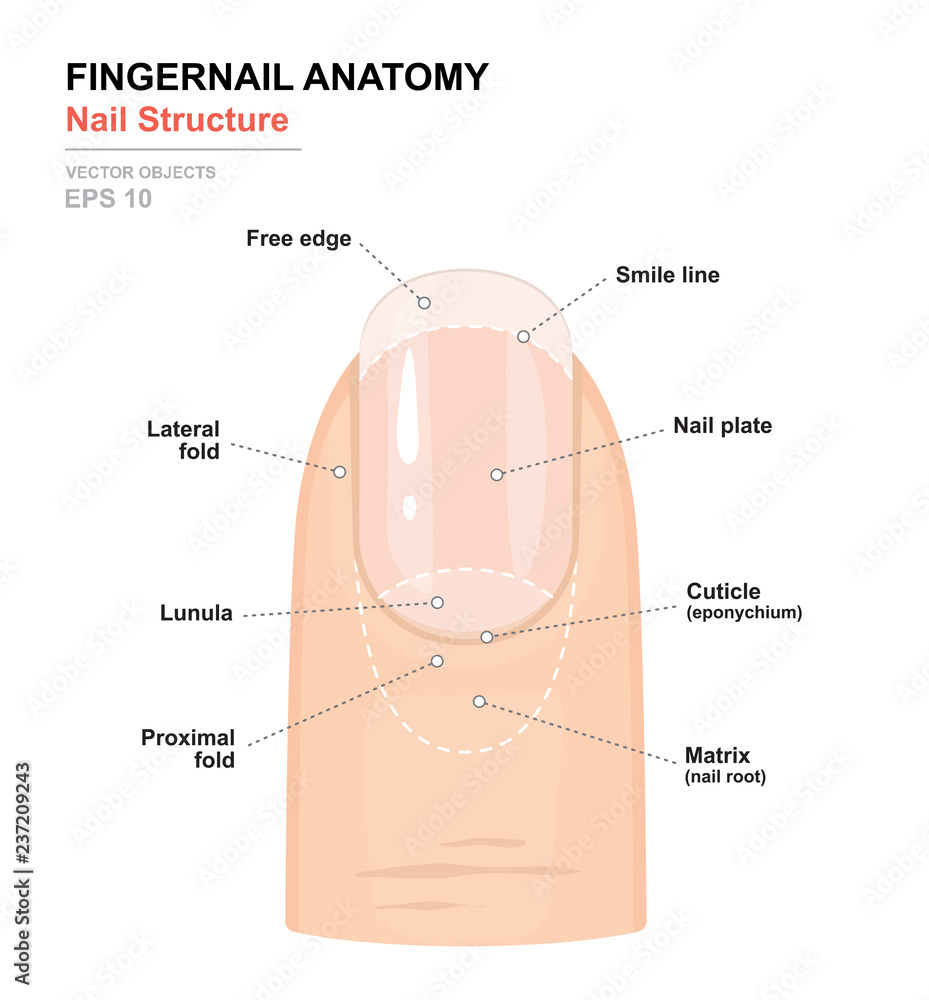
Fingernail
नाखून
Syllable: Fingernail
Pronunciation: Naakhoon
- Her fingernails are clean. – उसके नाखून साफ़ हैं।
- I cut my fingernails. – मैंने अपने नाखून काटे।
- His fingernails are short. – उसके नाखून छोटे हैं।
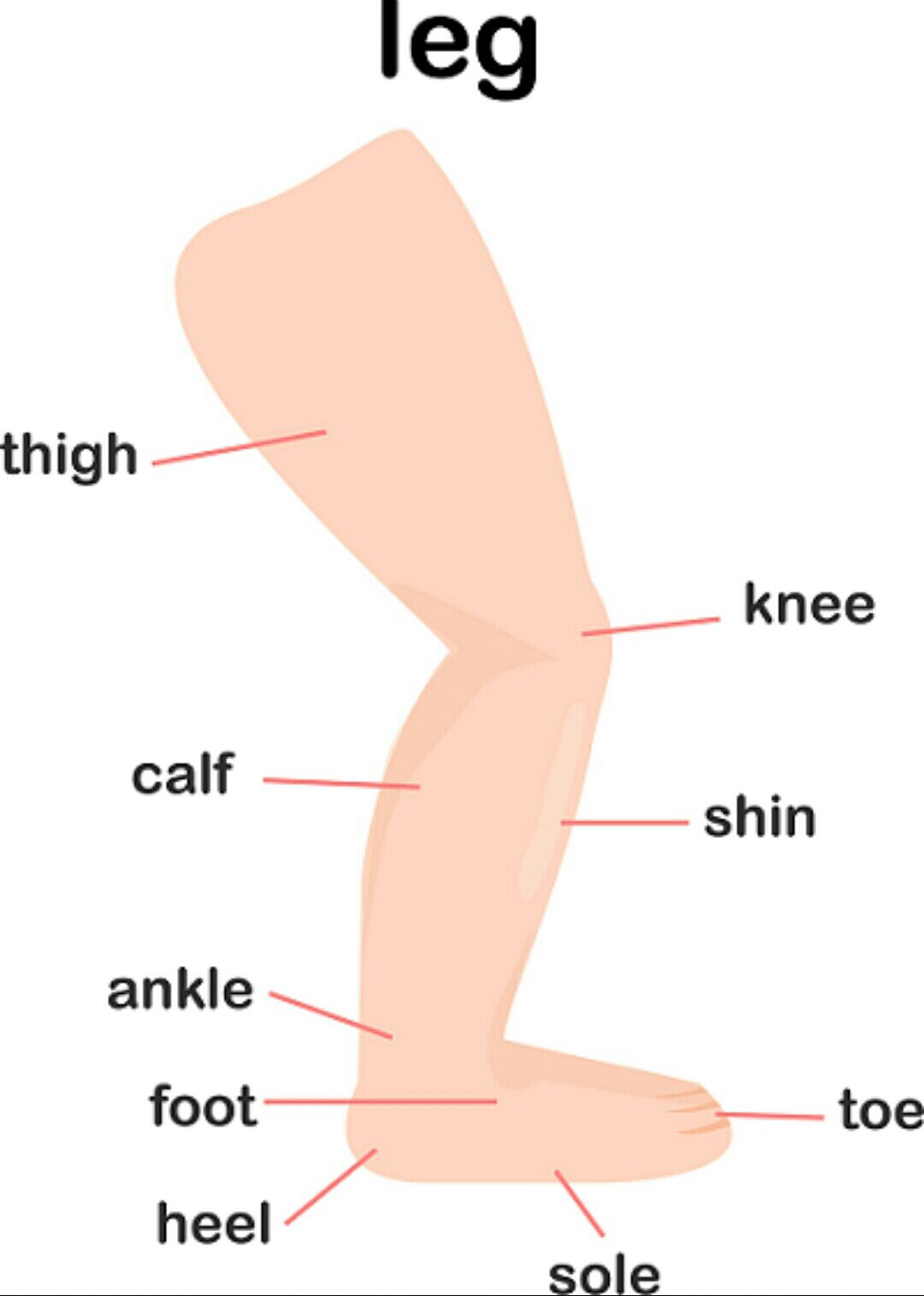
Leg
टाँग
Syllable: Leg
Pronunciation: Taang
- My leg hurts. – मेरी टाँग में दर्द है।
- He lifted his leg. – उसने अपनी टाँग उठाई।
- She injured her leg. – उसकी टाँग में चोट लगी।
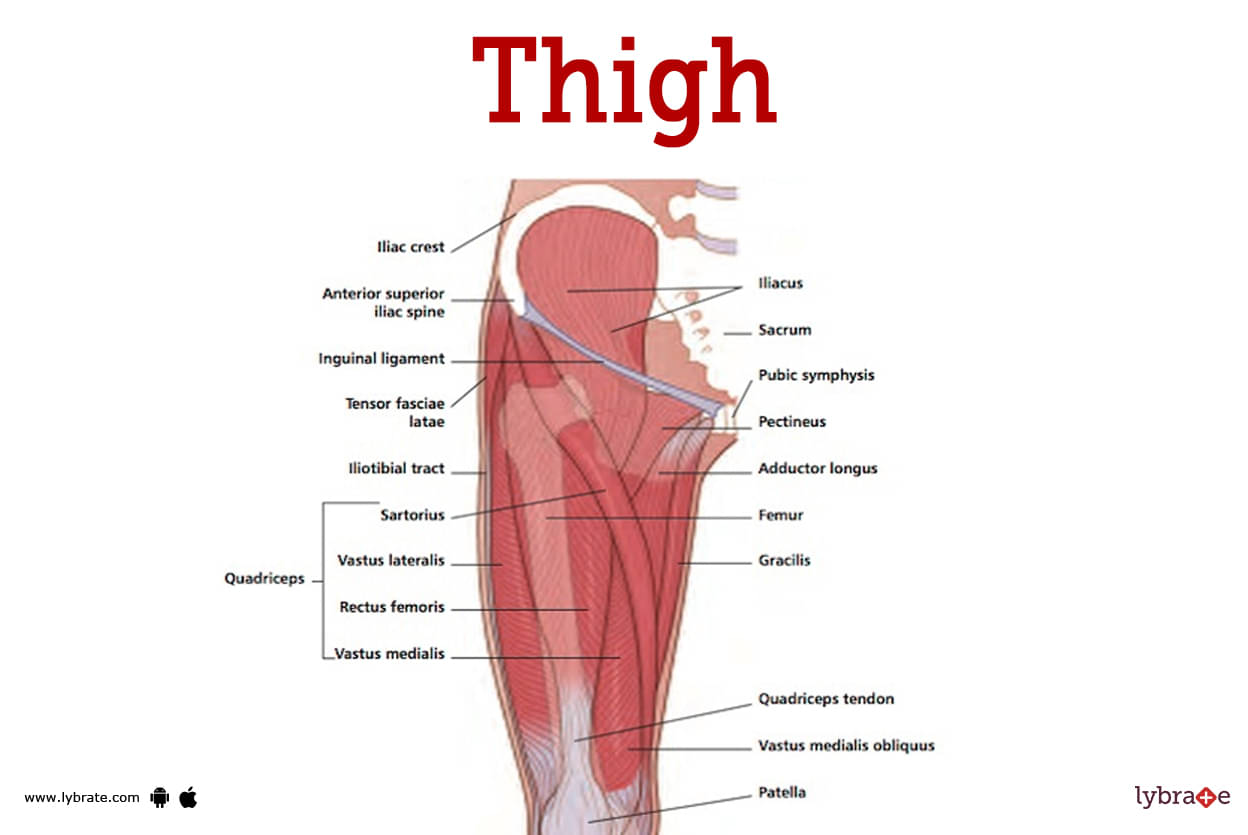
Thigh
जाँघ
Syllable: Thigh
Pronunciation: Jaangh
- He has strong thighs. – उसकी जाँघें मज़बूत हैं।
- My thigh hurts after running. – दौड़ने के बाद मेरी जाँघ में दर्द है।
- She stretched her thigh muscles. – उसने अपनी जाँघ की मांसपेशियों को खींचकर व्यायाम किया।
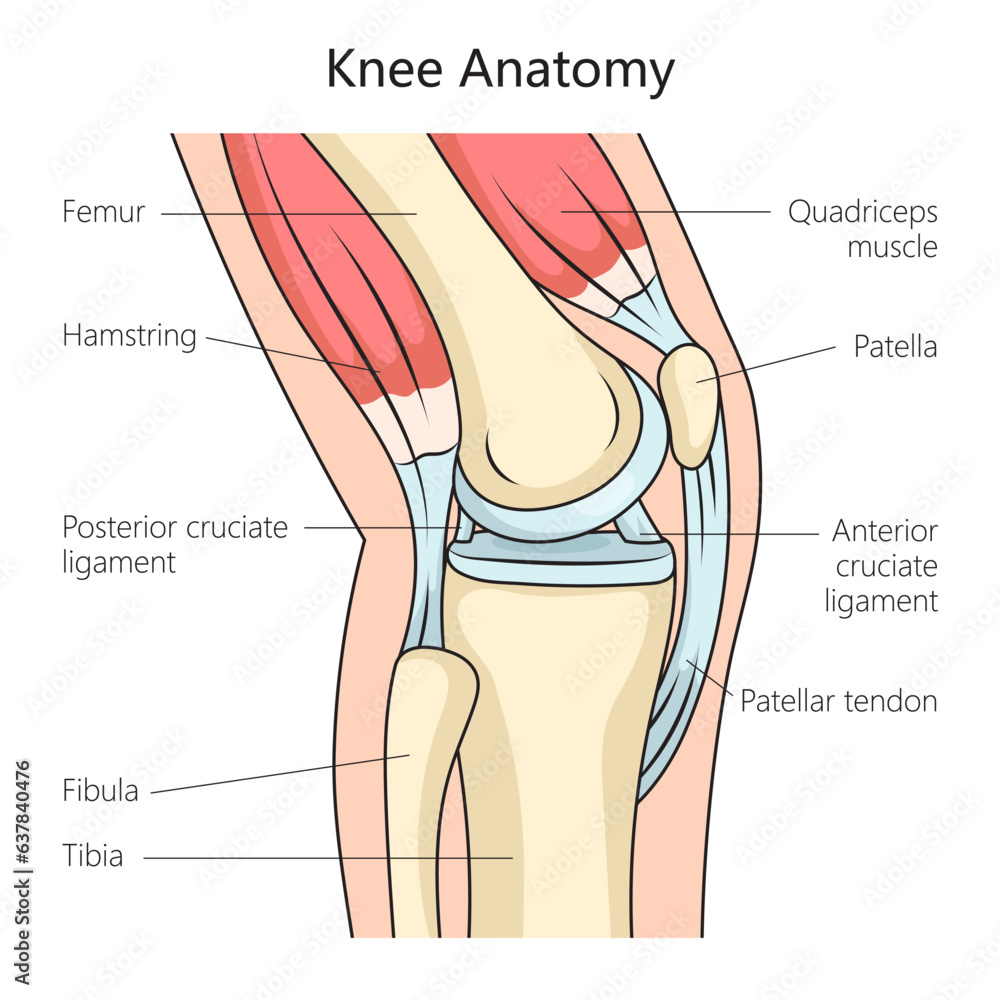
Knee
घुटना
Syllable: Knee
Pronunciation: Ghutna
- My knee hurts. – मेरे घुटने में दर्द है।
- He bent his knee. – उसने अपना घुटना मोड़ा।
- She injured her knee. – उसके घुटने में चोट लगी।

Calf
पिंडली
Syllable: Calf
Pronunciation: Pindli
- My calf hurts after running. – दौड़ने के बाद मेरी पिंडली में दर्द है।
- He stretched his calf. – उसने अपनी पिंडली को खींचकर व्यायाम किया।
- The calf muscle is strong. – पिंडली की मांसपेशी मज़बूत है।

Ankle
टखना
Syllable: Ankle
Pronunciation: Takhna
- She twisted her ankle. – उसका टखना मुड़ गया।
- My ankle is swollen. – मेरा टखना सूज गया है।
- He wears an ankle support. – वह टखने का सपोर्ट पहनता है।

Foot
पैर
Syllable: Foot
Pronunciation: Pair
- My foot hurts. – मेरे पैर में दर्द है।
- He washed his feet. – उसने अपने पैर धोए।
- She put her foot on the floor. – उसने अपना पैर फर्श पर रखा।
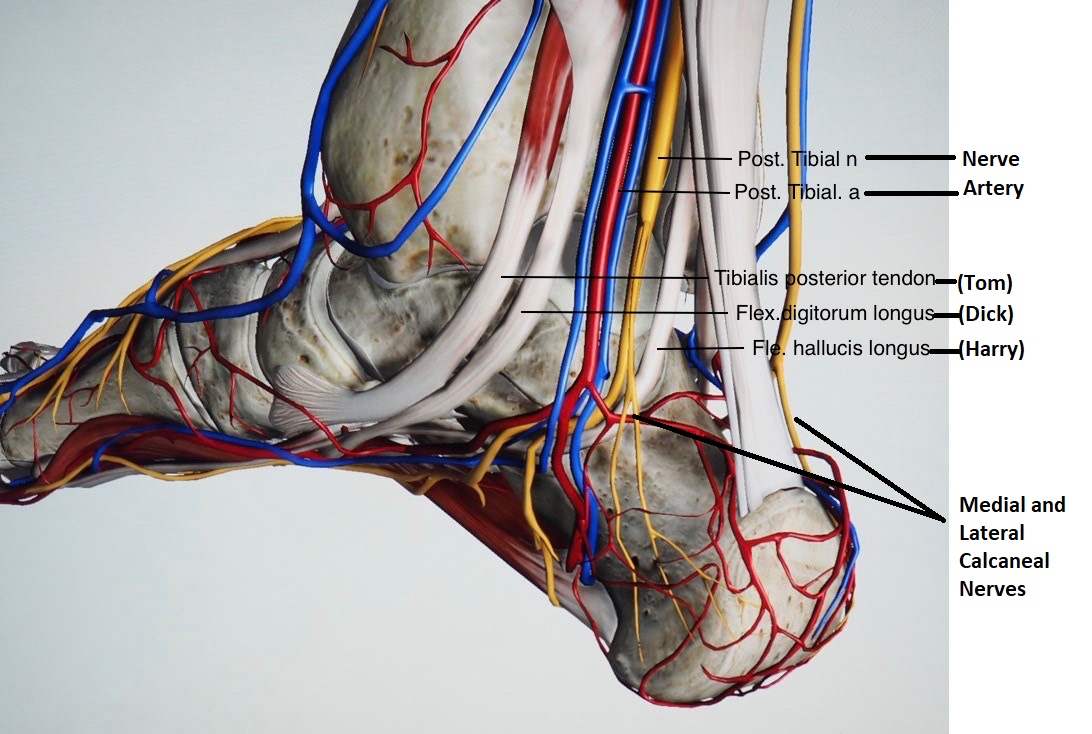
Heel
एड़ी
Syllable: Heel
Pronunciation: Edi
- My heel hurts. – मेरी एड़ी में दर्द है।
- She hurt her heel. – उसकी एड़ी में चोट लगी।
- The heel supports the foot. – एड़ी पैर को सहारा देती है।
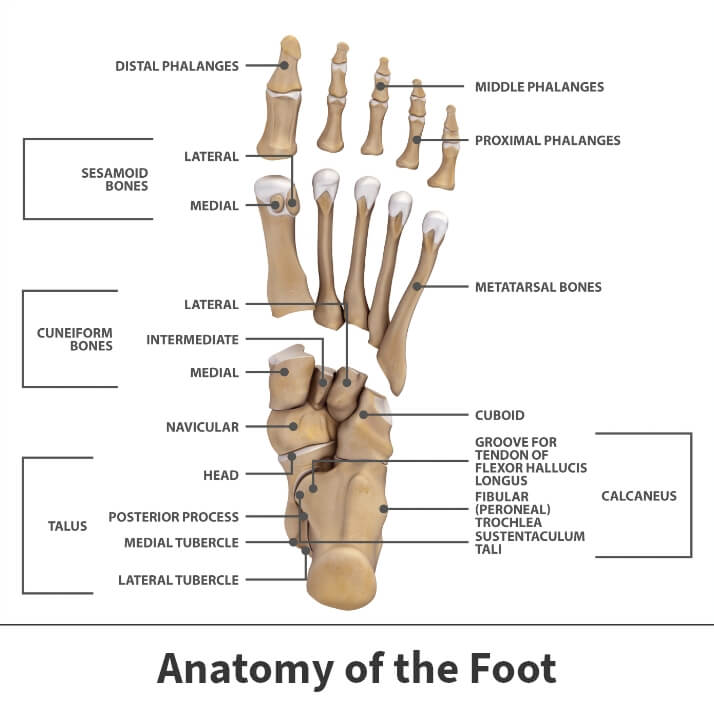
Toe
पैर की उँगली
Syllable: Toe
Pronunciation: Pair Ki Ungli
- I hurt my toe. – मेरे पैर की उँगली में चोट लगी।
- He moved his toes. – उसने अपने पैर की उँगलियाँ हिलाईं।
- She painted her toenails. – उसने अपने पैर के नाखूनों पर रंग लगाया।
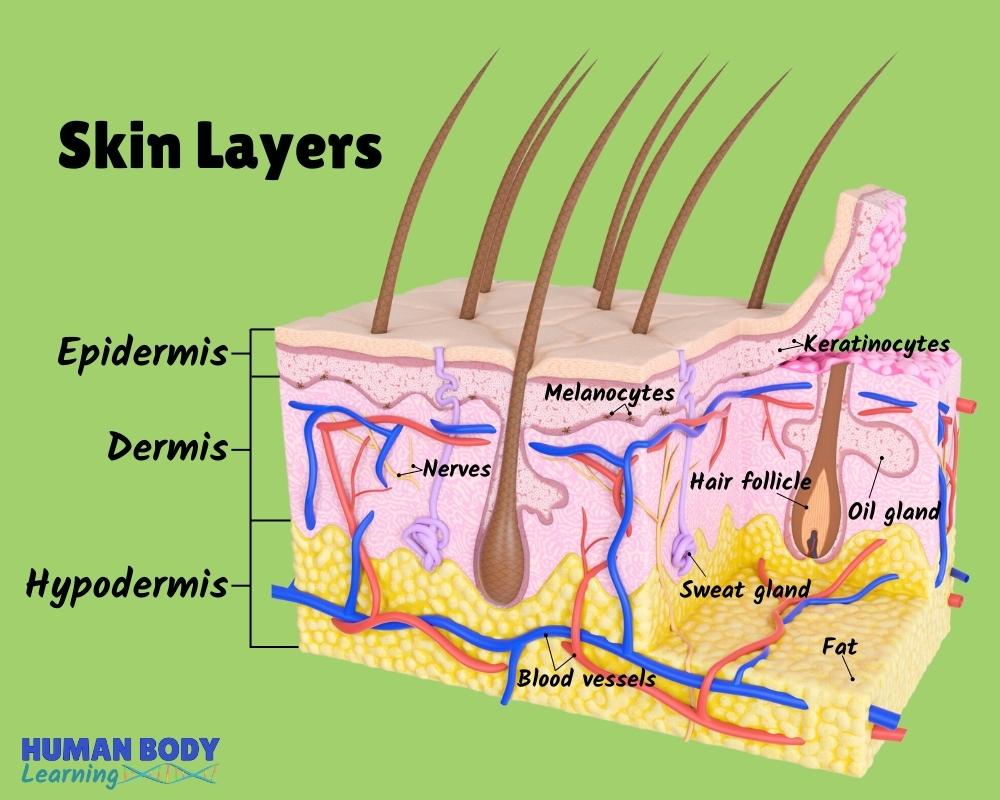
Skin
त्वचा
Syllable: Skin
Pronunciation: Twacha
- Her skin is soft. – उसकी त्वचा मुलायम है।
- Keep your skin clean. – अपनी त्वचा साफ़ रखो।
- The skin protects the body. – त्वचा शरीर की रक्षा करती है।

Bone
हड्डी
Syllable: Bone
Pronunciation: Haddi
- The doctor checked the bone. – डॉक्टर ने हड्डी की जाँच की।
- Strong bones are important. – मज़बूत हड्डियाँ महत्वपूर्ण होती हैं।
- He broke a bone in his arm. – उसकी बाँह की एक हड्डी टूट गई।

Muscle
मांसपेशी
Syllable: Muscle
Pronunciation: Maanspeshi
- Exercise makes muscles stronger. – व्यायाम मांसपेशियों को मज़बूत बनाता है।
- He has strong muscles. – उसकी मांसपेशियाँ मज़बूत हैं।
- The muscle needs rest after exercise. – व्यायाम के बाद मांसपेशी को आराम चाहिए।

Heart
हृदय
Syllable: Heart
Pronunciation: Hriday
- The heart pumps blood. – हृदय रक्त पंप करता है।
- Exercise is good for the heart. – व्यायाम हृदय के लिए अच्छा है।
- The heart is an important organ. – हृदय एक महत्वपूर्ण अंग है।
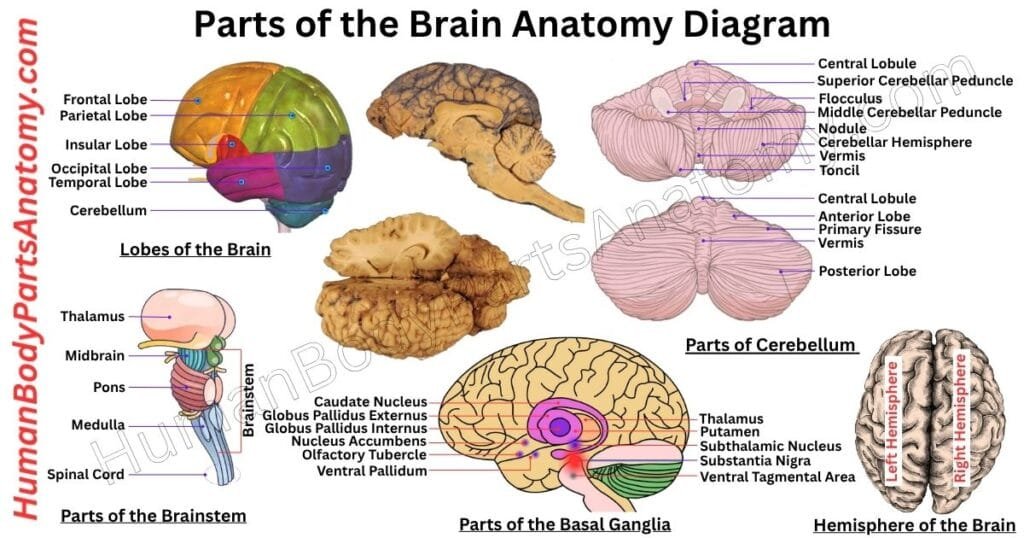
Brain
मस्तिष्क
Syllable: Brain
Pronunciation: Mastishk
- The brain controls the body. – मस्तिष्क शरीर को नियंत्रित करता है।
- The brain needs oxygen. – मस्तिष्क को ऑक्सीजन की आवश्यकता होती है।
- Reading exercises the brain. – पढ़ना मस्तिष्क का व्यायाम करता है।

Lung
फेफड़ा
Syllable: Lung
Pronunciation: Fefda
- The lungs help us breathe. – फेफड़े हमें साँस लेने में मदद करते हैं।
- He has healthy lungs. – उसके फेफड़े स्वस्थ हैं।
- The lungs take in oxygen. – फेफड़े ऑक्सीजन लेते हैं।
Common Body Parts Names in Hindi
Some common body parts names include सिर, बाल, चेहरा, आँख, कान, नाक, मुँह, होंठ, दाँत, जीभ, गर्दन, कंधा, हाथ, उंगली, छाती, पेट, पीठ, पैर, घुटना, और एड़ी.
These words describe parts of the body that people commonly mention when talking about appearance, movement, health, exercise, and personal care.
Popular Body Parts Names in Hindi
सिर (Head) is the uppermost part of the human body. It contains important structures such as the brain, eyes, ears, nose, and mouth.
चेहरा (Face) is the front part of the head. It includes features such as the eyes, nose, mouth, cheeks, forehead, and chin.
आँख (Eye) is used for seeing. People normally have two eyes.
कान (Ear) is used for hearing and also plays an important role in maintaining balance.
नाक (Nose) is used for smelling and helps air enter and leave the respiratory system.
मुँह (Mouth) is used for eating, drinking, speaking, and other activities.
दाँत (Teeth) help bite and chew food.
जीभ (Tongue) helps with tasting, speaking, and moving food inside the mouth.
गर्दन (Neck) connects the head with the rest of the body and allows the head to move.
कंधा (Shoulder) connects the upper arm with the body and helps with arm movement.
हाथ (Hand) is used for holding, touching, writing, carrying, and many other activities.
उंगली (Finger) is one of the digits of the hand and helps with gripping and handling objects.
पैर (Foot/Leg) helps support the body and allows people to stand, walk, run, and move.
घुटना (Knee) is the joint between the upper and lower parts of the leg.
पेट (Stomach/Abdomen) refers to the central front area of the body between the chest and pelvis.
Head and Face Parts Names in Hindi
The head and face contain many important body parts that are commonly mentioned in everyday conversations.
Useful vocabulary includes सिर for head, बाल for hair, माथा for forehead, आँख for eye, भौंह for eyebrow, पलक for eyelid or eyelash depending on context, कान for ear, नाक for nose, गाल for cheek, मुँह for mouth, होंठ for lips, दाँत for teeth, जीभ for tongue, ठोड़ी for chin, and जबड़ा for jaw.
These words are particularly useful when describing a person’s face, appearance, expressions, and basic physical features.
Eye and Ear Parts in Hindi
The eyes and ears contain smaller parts that are also useful vocabulary for learners.
Common eye-related words include आँख, पलक, भौंह, पुतली, और आँख का सफेद भाग. The पुतली refers to the pupil of the eye.
Useful ear vocabulary includes कान, कान की लौ, और कान का पर्दा. These words can help learners understand more detailed descriptions of the ear.
Learning these terms is useful when reading simple Hindi material related to the body and personal health.
Mouth and Teeth Parts in Hindi
The mouth contains several parts that are commonly mentioned in everyday conversations.
Important words include मुँह, होंठ, दाँत, जीभ, मसूड़े, तालू, और जबड़ा.
मसूड़े means gums, while तालू refers to the palate or roof of the mouth.
These words are useful when learning vocabulary related to eating, drinking, speaking, brushing teeth, and personal hygiene.
Upper Body Parts Names in Hindi
The upper part of the body includes the neck, shoulders, chest, arms, hands, and other related parts.
Common vocabulary includes गर्दन, कंधा, छाती, पीठ, बाँह, कोहनी, कलाई, हाथ, हथेली, और उंगली.
बाँह means arm, while कोहनी means elbow and कलाई means wrist.
हथेली refers to the palm of the hand. These words are useful when describing movement, clothing, exercise, and physical activities.
Lower Body Parts Names in Hindi
The lower part of the body includes the hips, thighs, knees, legs, feet, and toes.
Useful vocabulary includes कमर, कूल्हा, जांघ, घुटना, पिंडली, टखना, पैर, एड़ी, तलवा, और पैर की उंगली.
जांघ means thigh, while पिंडली refers to the calf area of the lower leg.
टखना means ankle, एड़ी means heel, and तलवा means the sole of the foot.
These words are useful when talking about walking, running, exercise, sports, footwear, and movement.
Hand and Finger Parts in Hindi
Hands are used for many everyday activities such as writing, eating, holding objects, drawing, and working.
Useful words include हाथ, हथेली, कलाई, उंगली, अंगूठा, तर्जनी, मध्यमा, अनामिका, और कनिष्ठा.
अंगूठा means thumb, while तर्जनी means index finger. मध्यमा means middle finger, अनामिका means ring finger, and कनिष्ठा means little finger.
Learning these words helps learners describe individual fingers and understand more detailed Hindi instructions.
Leg and Foot Parts in Hindi
The legs and feet support the body and help with standing, walking, running, jumping, and many other movements.
Common vocabulary includes पैर, जांघ, घुटना, पिंडली, टखना, एड़ी, तलवा, और पैर की उंगली.
पैर की उंगली means toe, while एड़ी means heel.
These words are useful for talking about walking, sports, exercise, shoes, socks, and everyday movement.
Internal Body Parts Names in Hindi
The human body also contains many internal organs that are important parts of Hindi vocabulary.
Common internal body terms include हृदय for heart, फेफड़े for lungs, यकृत for liver, गुर्दा for kidney, मस्तिष्क for brain, आमाशय for stomach, और आंत for intestine.
These words are more commonly used in educational, scientific, and health-related contexts.
Learning internal body parts helps students understand basic Hindi science and biology vocabulary.
Body Parts Related to Movement in Hindi
Many body parts work together to help people move, walk, run, jump, lift, and perform everyday activities.
Important vocabulary includes मांसपेशी for muscle, हड्डी for bone, जोड़ for joint, कंधा for shoulder, कोहनी for elbow, कलाई for wrist, घुटना for knee, and टखना for ankle.
These words are useful when learning Hindi vocabulary related to exercise, sports, physical movement, and basic anatomy.
Body Parts Related to the Five Senses
The human body has several organs associated with the five senses.
The आँख is associated with seeing, the कान with hearing, the नाक with smelling, the जीभ with tasting, and the त्वचा with touch.
The five sense-related words can be described as दृष्टि for sight, श्रवण for hearing, गंध for smell, स्वाद for taste, and स्पर्श for touch.
Learning these words helps students connect body parts with basic science and everyday experiences.
Body Parts and Their Common Uses
Different body parts perform different functions in everyday life.
आँख helps us see, while कान helps us hear. नाक helps us smell, and जीभ helps us taste and also supports speech.
हाथ and उंगली are used for holding, writing, touching, and handling objects. पैर helps us stand, walk, run, and move.
दाँत help us bite and chew food, while मुँह is used for eating, drinking, and speaking.
Learning body parts together with their common functions makes Hindi vocabulary easier to understand and remember.
Difference Between Body Parts and Internal Organs
The term body parts can refer broadly to visible and internal parts of the human body.
Visible parts include सिर, आँख, कान, नाक, हाथ, पैर, उंगली, और घुटना. These can generally be seen from outside.
Internal organs include हृदय, फेफड़े, यकृत, गुर्दे, और मस्तिष्क. These are located inside the body and are mainly discussed in science, biology, and health-related contexts.
Understanding this difference helps learners organize their Hindi body vocabulary more clearly.
Why Learning With Pictures Is Helpful
Learning body parts names with pictures makes vocabulary easier to understand because learners can connect each Hindi word with the actual part of the body.
For example, seeing a picture of a हाथ while learning the English word Hand helps learners remember both the word and its meaning.
Pictures are especially useful for children and beginners. Teachers can use body parts pictures for worksheets, flashcards, classroom activities, and Hindi vocabulary lessons.
Pictures can also help learners distinguish between related body parts such as कलाई and हाथ, or टखना and पैर.
Practice Activities
Practice body parts names by looking at a picture of the human body and trying to identify each part in Hindi before checking its English meaning. This helps improve vocabulary recognition and recall.
Choose several body parts each day and write their Hindi names in a notebook. Next to each word, write its English meaning and briefly describe what that body part does.
You can also look at yourself in a mirror and identify different visible body parts in Hindi. Try to name the parts of your face, head, hands, arms, and legs.
Another useful activity is to create picture flashcards. Put a picture of a body part on one side and its Hindi name on the other side. Review the cards regularly until you can identify the words without assistance.
Hindi Body Parts Name
| # | English Body Part Name | Hindi Body Part Name |
|---|---|---|
| 1 | Head | सिर |
| 2 | Hair | बाल |
| 3 | Face | चेहरा |
| 4 | Forehead | माथा |
| 5 | Eye | आँख |
| 6 | Eyebrow | भौंह |
| 7 | Eyelash | पलक |
| 8 | Eyelid | पलक |
| 9 | Ear | कान |
| 10 | Nose | नाक |
| 11 | Nostril | नथुना |
| 12 | Cheek | गाल |
| 13 | Mouth | मुँह |
| 14 | Lip | होंठ |
| 15 | Tooth | दाँत |
| 16 | Tongue | जीभ |
| 17 | Chin | ठोड़ी |
| 18 | Jaw | जबड़ा |
| 19 | Neck | गर्दन |
| 20 | Shoulder | कंधा |
| 21 | Chest | छाती |
| 22 | Back | पीठ |
| 23 | Waist | कमर |
| 24 | Stomach | पेट |
| 25 | Arm | बाँह |
| 26 | Elbow | कोहनी |
| 27 | Forearm | बाँह का निचला हिस्सा |
| 28 | Wrist | कलाई |
| 29 | Hand | हाथ |
| 30 | Palm | हथेली |
| 31 | Finger | उँगली |
| 32 | Thumb | अँगूठा |
| 33 | Fingernail | नाखून |
| 34 | Leg | टाँग |
| 35 | Thigh | जाँघ |
| 36 | Knee | घुटना |
| 37 | Calf | पिंडली |
| 38 | Ankle | टखना |
| 39 | Foot | पैर |
| 40 | Heel | एड़ी |
| 41 | Toe | पैर की उँगली |
| 42 | Skin | त्वचा |
| 43 | Bone | हड्डी |
| 44 | Muscle | मांसपेशी |
| 45 | Heart | हृदय |
| 46 | Brain | मस्तिष्क |
| 47 | Lung | फेफड़ा |
1. Which is the correct Hindi name for “Head”?
2. Which is the correct Hindi name for “Hair”?
3. Which is the correct Hindi name for “Face”?
4. Which is the correct Hindi name for “Forehead”?
5. Which is the correct Hindi name for “Eye”?
6. Which is the correct Hindi name for “Eyebrow”?
7. Which is the correct Hindi name for “Eyelash”?
8. Which is the correct Hindi name for “Eyelid”?
9. Which is the correct Hindi name for “Ear”?
10. Which is the correct Hindi name for “Nose”?
11. Which is the correct Hindi name for “Nostril”?
12. Which is the correct Hindi name for “Cheek”?
13. Which is the correct Hindi name for “Mouth”?
14. Which is the correct Hindi name for “Lip”?
15. Which is the correct Hindi name for “Tooth”?
16. Which is the correct Hindi name for “Tongue”?
17. Which is the correct Hindi name for “Chin”?
18. Which is the correct Hindi name for “Jaw”?
19. Which is the correct Hindi name for “Neck”?
20. Which is the correct Hindi name for “Shoulder”?
21. Which is the correct Hindi name for “Chest”?
22. Which is the correct Hindi name for “Back”?
23. Which is the correct Hindi name for “Waist”?
24. Which is the correct Hindi name for “Stomach”?
25. Which is the correct Hindi name for “Arm”?
26. Which is the correct Hindi name for “Elbow”?
27. Which is the correct Hindi name for “Forearm”?
28. Which is the correct Hindi name for “Wrist”?
29. Which is the correct Hindi name for “Hand”?
30. Which is the correct Hindi name for “Palm”?
31. Which is the correct Hindi name for “Finger”?
32. Which is the correct Hindi name for “Thumb”?
33. Which is the correct Hindi name for “Fingernail”?
34. Which is the correct Hindi name for “Leg”?
35. Which is the correct Hindi name for “Thigh”?
36. Which is the correct Hindi name for “Knee”?
37. Which is the correct Hindi name for “Calf”?
38. Which is the correct Hindi name for “Ankle”?
39. Which is the correct Hindi name for “Foot”?
40. Which is the correct Hindi name for “Heel”?
41. Which is the correct Hindi name for “Toe”?
42. Which is the correct Hindi name for “Skin”?
43. Which is the correct Hindi name for “Bone”?
44. Which is the correct Hindi name for “Muscle”?
45. Which is the correct Hindi name for “Heart”?
46. Which is the correct Hindi name for “Brain”?
47. Which is the correct Hindi name for “Lung”?
Why Hindi Body Parts Names Matter
Body parts vocabulary is an important part of everyday Hindi because people regularly talk about appearance, movement, exercise, health, personal care, and physical activities.
Words such as सिर, आँख, कान, नाक, मुँह, हाथ, पैर, उंगली, घुटना, और पेट are particularly useful because they refer to body parts that learners can easily see and identify.
Learning these words also helps children understand simple instructions and descriptions. When learners can identify a body part and connect it with its Hindi name, they can build vocabulary through real-life observation.
By learning body parts names in Hindi with pictures, students can develop practical Hindi vocabulary and become more confident when talking about the human body.
Continue Exploring Hindi Vocabulary
Learning body parts vocabulary is another useful step toward improving everyday Hindi. After learning these words, you can continue exploring other useful Hindi vocabulary topics such as animal names, food names, clothes names, jewellery names, school items, stationery items, household items, furniture names, kitchen items, electronic items, tools names, sports names, games names, and toys names.
Keep practicing the Hindi words regularly and use pictures whenever possible. Connecting each word with a real body part or familiar picture can make Hindi vocabulary easier to remember and more useful in everyday communication.